Orthodontic treatment for teens increasingly addresses more than crowded or crooked teeth, since some growing smiles also need help repositioning the jaw itself. One option that many families ask about by name is Invisalign® mandibular advancement, a feature designed to correct certain bite issues while a young patient’s jaw is still developing.
Understanding This Bite-Correcting Feature
Invisalign mandibular advancement is built to address a specific type of bite misalignment, one that develops as the jaw grows rather than something caused purely by tooth position. Before exploring how the feature functions within a set of clear aligners, it’s worth understanding the bite classification it’s designed to treat and why jaw positioning matters so much for growing patients.
What Is a Class II Bite?
A Class II bite, often described as an overbite, happens when the upper jaw sits noticeably further forward than the lower jaw. The AAO’s glossary of orthodontic terms breaks down this classification and several other common terms in plain, patient-friendly language.
How Does the Feature Work?
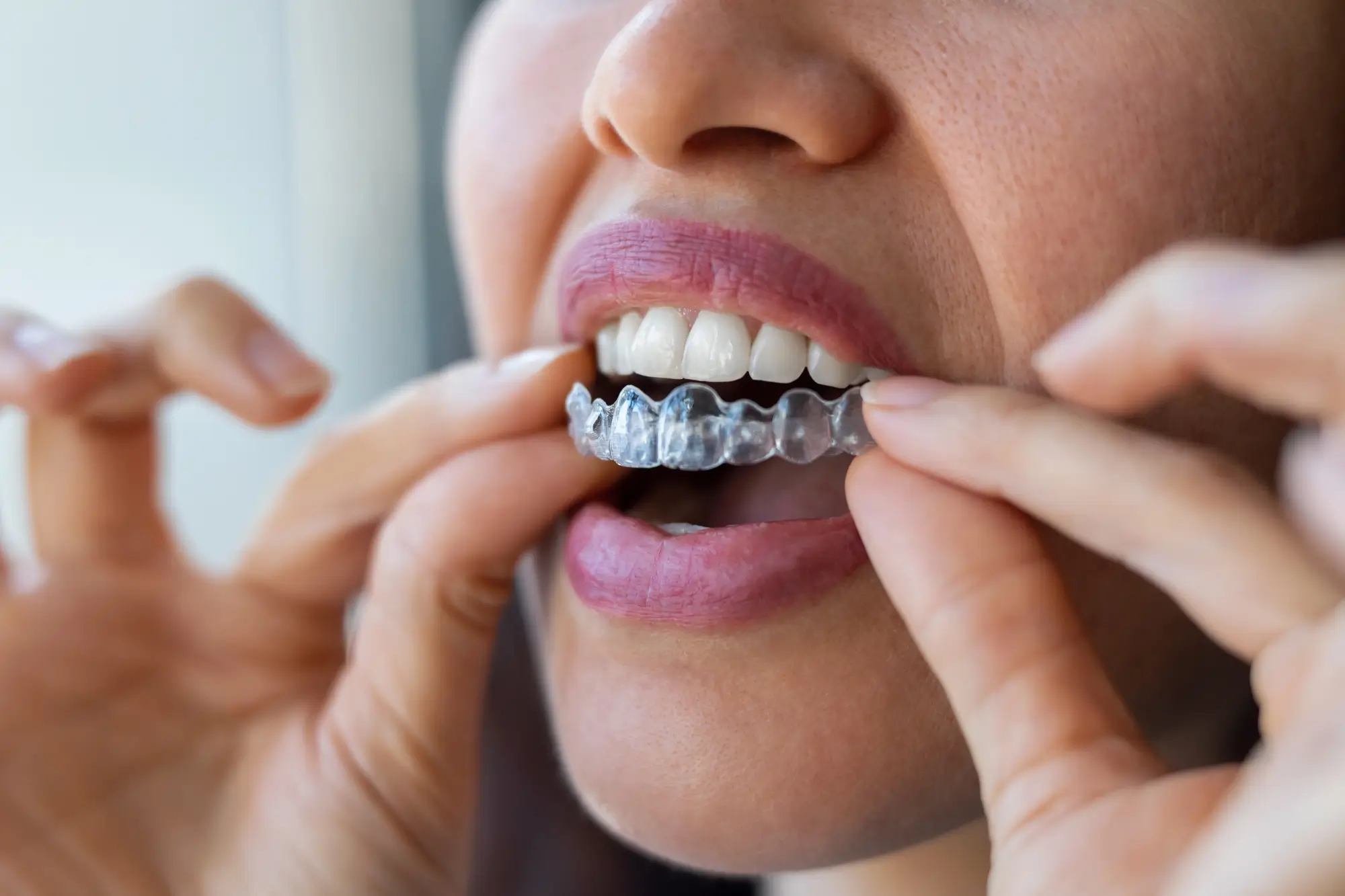
Small precision wings are built directly into the upper and lower aligners, and they interlock each time the patient bites down. This design fits alongside the practice’s different treatment options, since it works within a standard set of clear aligners rather than a separate, bulkier appliance.
As the aligners hold the jaw in a slightly more forward position over time, growth is gently guided in a way that gradually corrects the bite. This particular approach was developed by Invisalign to treat growing patients without traditional headgear or fixed jaw appliances.
Compared with older bite-correction methods, this approach offers several practical advantages:
- No visible headgear or facial straps
- No separate appliance beyond the aligners themselves
- Removable for eating, brushing, and flossing
- Works alongside standard tooth alignment at the same time
Frequently Asked Questions About This Treatment
Is This Feature Available for Adults?
This particular feature is designed specifically for tweens and teens who still have meaningful growth potential remaining in the jaw. Adult patients dealing with a similar bite concern have other effective treatment options worth discussing during a consultation.
How Long Does Treatment Typically Take?
Cases identified through early orthodontic treatment evaluations often respond faster, since the jaw still has more room to grow into a better position. The AAO’s guide to child orthodontics explains why age and timing matter so much for these kinds of growing-patient cases.
Does It Feel Different from Regular Aligners?
Most patients report only mild pressure as the precision wings engage, similar to the feeling of switching to a new set of aligners. There are no extra wires or headgear involved, so everyday routines like brushing, flossing, and eating stay largely the same.
Does Insurance Typically Help Cover This Treatment?
Many orthodontic insurance plans offer at least partial coverage for treatment involving jaw correction. However, the exact benefit varies by plan. A consultation is the best time to review coverage details specific to a family’s individual plan.

Ready to Ask About Invisalign Mandibular Advancement?
Dr. Blair Cohen Orthodontics can help determine whether a growing smile is a good candidate for this type of bite correction. Reach out to schedule a consultation and ask directly about Invisalign mandibular advancement during that visit.
*Invisalign®, the Invisalign logo, and iTero®, among others, are trademarks and/or service marks of Align Technology, Inc. or one of its subsidiaries or affiliated companies and may be registered in the U.S. and/or other countries.